Appreciations
The list is long, but these names are at the top (with an assist from AI in the writing and research) ...
Claude Monet (1840-1926): Monet's use of color moves me whenever I am in his presence. He played a major role in birthing the Impressionist movement and painted well into his 80s. His later work became looser and more abstract. If you get to Paris, don't miss Musee Marmottan Monet, and L'Orangerie, where you can see his progression and one of his last great works. It's especially fun to visit right after a trip to see his home in Giverny, about an hour by train outside Paris. The gardens are magnificent, especially in spring and summer.
Paul Cézanne (1839-1906): Pablo Picasso called Cézanne "the father of us all," referring to his groundbreaking work to shift perspective (as in "Basket of Apples," 1893, Art Institute of Chicago, Helen Birch Bartlett Memorial Collection). His work led to Cubism and helped hew a path to modern art. Look carefully at this work - and others - and you'll see how he's beginning to see from multiple perspectives.
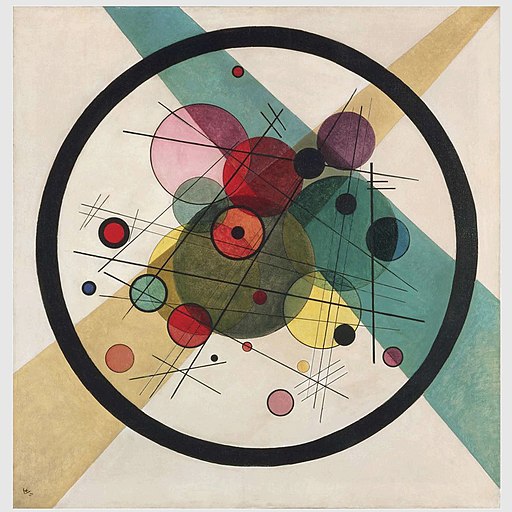
Vasily Kandinsky (1866-1944): An important innovator, he asked the question in 1911: "Must we not renounce the object altogether, throw it to the winds and instead lay bare the purely abstract?" And then soon after answered that question with "Composition V," a radical new form, according to the Museum of Modern Art. His use of color influenced a new generation of artists. He intuited that music and visual art were closely related and, in fact, probably experienced synesthesia, a condition where one sense triggers another. He is said to have seen colors when he heard music and heard music when he painted.
Henri Matisse (1869-1954): His bold use of color led him and his contemporaries to be tagged by a critic as "les fauves" —wild beasts. He pushed the boundaries of expressive color, and later, as his eyesight failed, he became a master of form and simplicity in his cut-outs.
Piet Mondrian (1872–1944) was a Dutch painter best known for pioneering abstract art through his iconic grid-based compositions of primary colors, black lines, and white space. Trained in the Hague School tradition, he evolved from landscapes and Impressionism into spiritual abstraction influenced by Theosophy. A founding member of the De Stijl movement, Mondrian developed "neoplasticism"—a radical reduction of form to vertical and horizontal lines. After moving to Paris, London, and ultimately New York, his work became more rhythmic and vibrant, culminating in "Broadway Boogie Woogie."
Hans Hofmann (1880-1966): This German-American painter and influential teacher was known for his pioneering role in Abstract Expressionism. His work blended European modernist traditions with bold color, dynamic compositions, and expressive brushwork, often exploring the "push-pull" theory of spatial tension using color to suggest movement and depth.
Jackson Pollock (1912-1956), Willem de Kooning (1904-1997), Mark Rothko (1903-1970), and Agnes Martin (1912-2004): Broadly, they represent various aspects of the Abstract Expressionism movement that arose in post-World War II New York and made NYC the center of modern art. They freed art from representation in their own unique ways - from Pollock's drip paintings to Martin's grids. Want to take a class? I highly recommend this MOMA class on ABEX via Coursera.
Helen Frankenthaler (1928-2011): I list her separately because I think her work is so important and groundbreaking. She was known for her pioneering role in Color Field painting. She developed the "soak-stain" method of pouring thinned paint onto raw canvas, allowing it to seep and spread organically. This method created luminous, fluid compositions that balanced spontaneity with control. Frankenthaler’s work built on Abstract Expressionism with a lyrical, atmospheric use of color.
Jack Whitten (1939–2018): Whitten was an American abstract artist known for his innovative approaches to painting and his exploration of history, memory, and technology in art. Emerging in the 1960s, he transitioned from gestural Abstract Expressionism to highly experimental techniques, including the use of acrylic "tiles" and sculptural paint applications. His later works often served as tributes to historical figures, particularly within Black history and the Civil Rights Movement. He was the subject of a recent exhibition at the Museum of Modern Art in New York.
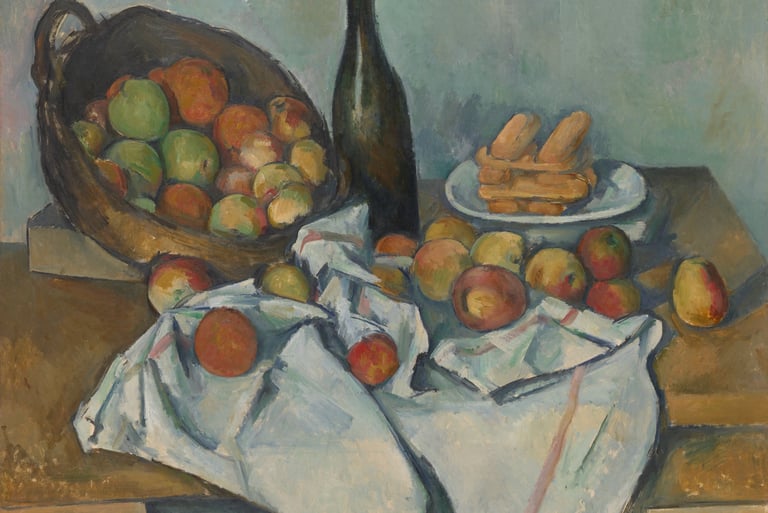
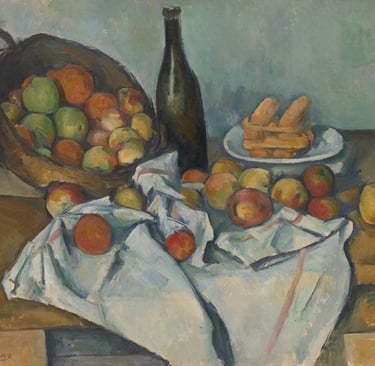
"The Basket of Apples" 1893 by Paul Cezanne (French, 1839-1906) Art Institute of Chicago.